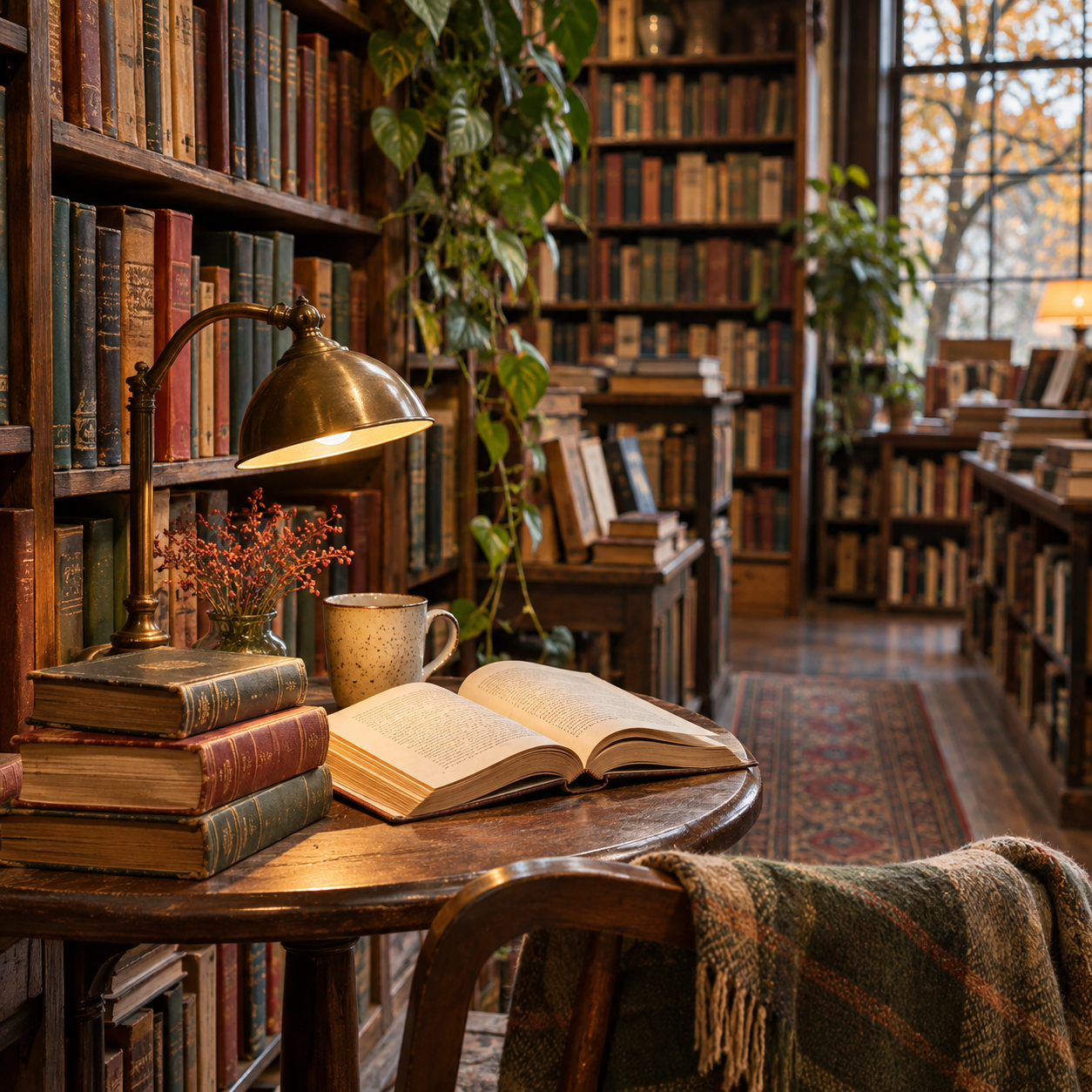
For years we have been hearing that the printed book is on its way out. First came the internet, then e-readers, smartphones, streaming entertainment, and a thousand little distractions that fit in a pocket. Surely, we were told, the neighborhood bookstore would eventually disappear.
But the bookstore has proved surprisingly difficult to put out of business.
In its November 15 Book Brew edition, Morning Brew reported an encouraging turn in the American book trade. Independent bookstores are multiplying. Barnes & Noble is opening new locations. And printed books still account for much of the publishing market.
At the same time, another set of numbers tells a less cheerful story. People are buying books, but fewer are making time to read for pleasure. It raises an interesting question: What are we looking for when we walk into a bookstore?
People Still Want Bookstores
According to figures from the American Booksellers Association cited by Morning Brew, the number of independent bookstores in the United States grew by 422 last year, a 31 percent increase over the previous year’s growth. Printed book sales in 2025 were also 10 percent higher than in 2019, according to Circana BookScan.
These are heartening numbers for anyone who has spent an afternoon wandering between shelves, turning over books, and finding something entirely different from what they came looking for.
There is a pleasure in a real bookstore that a search box cannot quite reproduce. You can enter looking for a gardening manual and leave with a biography of a woman who lived a hundred years ago. You might discover a novelist whose name you’ve never heard, or find a familiar title in an edition with illustrations you have never seen.
Independent shops, especially, give room to those discoveries. Their selections reflect the interests of the people who run them and the readers who visit. Some specialize in mysteries or romance. Others carry local history, used books, rare editions, or the miscellaneous treasures that resist easy classification.
A good bookshop need not contain every book ever published. It needs enough interesting ones to make you curious.
Buying Books and Reading Them Are Different Things
The less encouraging figures concern our reading habits. Morning Brew points to federal research showing that the share of Americans reading for pleasure on a given day fell from 28 percent in 2004 to 16 percent in 2023.
That is a substantial change. We have more ways to obtain books than any earlier generation, but our attention is divided among more things as well.
Perhaps this explains some of the appeal of the bookstore. Even people who struggle to find time to read are drawn to shelves full of stories, knowledge, and possibilities. Buying a book is, in part, a promise to ourselves that we will sit down and read it.
And often we do. A book waits without complaint while life interrupts. It will still be there when we return.
Old Ways of Making Books Have Their Admirers, Too
One of the loveliest stories in the report concerned Arion Press in San Francisco, where books are still made using traditional letterpress methods. The press produces a small number of carefully crafted editions, often of literary classics, with attention given to type, paper, illustration, and binding.
Its books are expensive collectors’ pieces, certainly not everyday purchases. But the continued interest in them says something about the printed book. For some readers, the object itself matters. The weight of the volume, the texture of the paper, the work of the printer and binder: these are part of the experience of owning it.
You need not spend thousands of dollars to appreciate that feeling. A modest secondhand book can be just as satisfying. An inscription on the flyleaf, a faded cloth cover, or a bookseller’s penciled price can tell you that this copy had a life before it reached your shelf.
The story inside remains the same. The particular book you hold has its own history.
A Quiet Place to Begin Again
The report also noted the popularity of silent book clubs, gatherings where people bring whatever they want to read and spend time reading together. No assigned title, no obligation to deliver a clever opinion, no homework.
I like the simplicity of that idea. People come together for the company of other readers and then settle into their own books. It suggests that perhaps we do not need elaborate encouragement to read. Sometimes a chair, a little quiet, and permission to put the phone away are enough.
The return of bookstores is good news, but I hope it leads to more than full shopping bags. I hope it leads to books being opened, passages reread, questions asked, and new writers discovered alongside the old ones.
At Uncommon Bookshop, that is the part of the story I want to follow. Not only the books everyone is talking about this season, but the ones that have survived many seasons already. Books that found readers decades ago and might still have something to say to us today.
There are plenty of those waiting on the shelves. I intend to keep looking for them.
Source note: Publishing and reading statistics discussed here were reported in Morning Brew’s Book Brew, November 15, 2026, drawing on the American Booksellers Association, Circana BookScan, and federal reading-habits research.
Leave a Reply